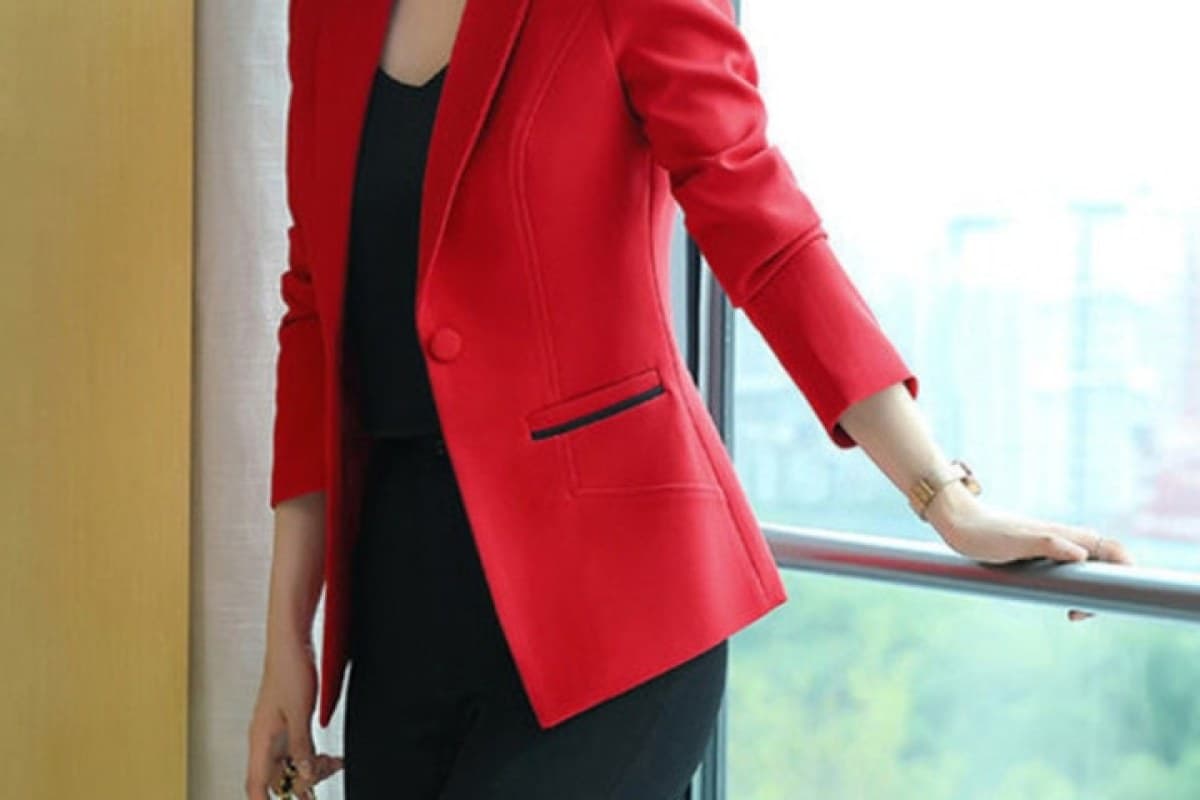
The most reliable women’s office blazer outfit is a well-fitted blazer in a solid neutral over a plain top and a bottom that matches the formality of your workplace: tailored trousers or a pencil or A-line skirt for conservative offices, and dark jeans or a midi dress for relaxed ones. The blazer does the work of making everything beneath it look professional. Below you will find the specific formulas for different dress codes, how to choose the right color and cut, what to wear underneath, how to build five days of outfits from two or three blazers, and the mistakes that make a blazer look sloppy.
Match the outfit to your dress code
Before you pick outfits, work out where your workplace sits on the spectrum. The formulas below are grouped by dress code, from most to least formal.
Formal or conservative office (law, finance, client-facing)
- The matching set: blazer and trousers or skirt in the same fabric and color, with a silk-look or crisp cotton blouse and closed-toe shoes.
- The separates version: a navy blazer with charcoal trousers, a white shirt and low block heels or polished loafers.
- Details that matter: button the blazer when standing, keep jewelry small, and keep a hem at or below the knee.
Business casual
- Blazer, knit and trousers: a fine merino or cotton knit under a blazer, with straight or tapered trousers and loafers.
- Blazer and midi dress: wear a solid dress with a tailored blazer over the top, with a belt to define the waist.
- Blazer and midi skirt: a pleated or slip skirt with a fitted blazer and ankle boots. For more combinations, read our guide to skirt and blazer combinations for work.
Smart casual or creative workplaces
- Blazer, tee and dark jeans: choose a plain tee or a fine knit, dark straight jeans without rips and leather sneakers or loafers.
- Oversized blazer, slim trousers: a slightly relaxed blazer with slim or straight trousers and a fitted top, so the proportions balance.
- Textured blazer, simple base: a tweed or textured blazer over a plain black base.
Remote and video-call days
On camera, only the top half matters. A blazer over a clean, plain top in a mid-tone color reads professional; avoid very small patterns that can flicker on video. Our piece on polished work-from-home outfits goes into camera-friendly colors and necklines.
How to choose the right blazer for the office
- Shoulder fit first. The seam should end at the edge of your shoulder. Everything else can be altered more easily than shoulders. See our blazer fit guide by body type for more detail.
- Color: navy, black, charcoal or gray are the easiest to pair. Camel, beige and soft gray offer variety, and a patterned or colored blazer works as an accent.
- Fabric: wool blends hold their shape and drape well, while crepe and ponte are comfortable and resist creasing. Linen looks lovely but wrinkles, so it suits relaxed workplaces. The exact blend is listed in each product’s details.
- Lining: a lined blazer slides over blouses and is more comfortable.
- Length: hip-length works with most bottoms. Longer blazers suit slim trousers and tall frames. Cropped blazers suit high-waisted trousers and dresses.
- Single or double-breasted: single-breasted is the easiest to wear, while double-breasted looks more formal and is best on frames that can carry the extra fabric across the chest.
You can compare cuts and colors in women’s blazers.
What to wear under a blazer
- Silk-look or cotton blouse: the classic. Tuck it in for a defined waist, or leave it out over slim trousers.
- Fine knit or turtleneck: smooth under a jacket, warm and professional.
- Shell or camisole: a good layer for warm offices. Choose a shape with a neckline that works with the blazer’s lapels.
- Tee: a plain, opaque cotton or jersey tee is fine in relaxed workplaces if it is crisp and fits properly.
- Dress: a sleeveless sheath or a slim-fit dress with a blazer over it is efficient.
Five days from three blazers
You do not need a lot of blazers. Take a navy blazer, a gray or camel blazer and one patterned or colored one, and try this rotation:
- Monday: navy blazer, white shirt, gray trousers, loafers.
- Tuesday: camel blazer, black turtleneck, dark jeans, ankle boots.
- Wednesday: navy blazer, midi dress in a solid color, low block heels.
- Thursday: patterned blazer, plain black top, black tailored trousers, pointed flats.
- Friday: camel blazer, tee, straight jeans and clean sneakers.
Each outfit changes at least two things (the blazer, the bottom or the shoes), so the week never feels repeated.
Dressing for hot offices, cold offices and long commutes
The same blazer behaves differently depending on the building. In a cold, air-conditioned office, a lined wool-blend or crepe blazer over a fine knit gives you a portable layer, and a scarf that matches the blazer tone adds warmth without breaking the line. In a hot or humid office, choose a lightweight, breathable blend or a linen-blend blazer, wear it over a sleeveless shell, and keep it on the back of your chair until you need it for meetings or client calls.
For long commutes, the risk is creasing. Fold a blazer inside out along the shoulder seams when you pack it, or hang it on a hook, not on a crowded rail. Avoid stuffing it into a tote, and if you cycle or walk, carry it and put it on at the door. A quick steam or a hang in a steamy bathroom before you leave often removes most wrinkles from crepe and wool blends.
Colors, shoes and accessories
Color combinations that always work
- Navy and white with camel accents: classic and clean.
- Black and gray with one bright accent: a red or green scarf keeps it lively.
- Tonal neutrals: cream, beige and camel in different textures.
- Pastel blazer with neutral base: soft blue or sage with white and gray.
Shoes and accessories for the office
- Loafers and block heels: comfortable and professional.
- Ankle boots: a good option for cooler months with trousers or midi skirts.
- Pointed flats: elegant, and they lengthen the leg.
- Bag: a structured tote that holds a laptop and stays upright.
- Jewelry and watch: keep it minimal, with small earrings, a simple watch and one ring.
Blazer mistakes that make an outfit look unprofessional
- Sleeves that hide your hands or hem that swallows your hips. Get the sleeve length adjusted; the cuff should end at the wrist bone or just below.
- Pulled buttons. If the jacket pulls into an X when buttoned, it is too small.
- Creased or unbrushed fabric. A blazer with visible crumples across the back looks careless. Steam it weekly.
- Pockets still stitched shut. New blazers often have pockets or vents held closed by a basting stitch; snip the threads carefully before you wear it.
- Too many competing layers. A blazer, a cardigan and a scarf can look heavy; pick two.
Keeping your blazer in shape
Hang it on a wide, shaped hanger, brush it lightly after wearing and spot-clean when needed. Follow the label’s care instructions, and see our care guide for wool blazers and dresses for storage tips.
Office blazer FAQ
Can I wear a blazer with jeans at work?
In many workplaces, yes, if the jeans are dark, well-fitting and free of rips, and the blazer is neat. Check your dress code first.
Should a work blazer be buttoned?
Button a single-breasted two-button blazer at the top button when standing, and unbutton when sitting. A one-button blazer is fastened when you stand.
What color blazer is best for a first professional job?
Navy or charcoal. They pair with almost everything and suit conservative and relaxed offices alike.
How many blazers do I need for work?
Two or three is enough. Choose different colors, and vary the bottoms and tops to make the week feel varied.
To build your rotation, start with women’s pants that match the blazers you already own, or browse the full ADDMPS women’s collection.
Edited by the ADDMPS Style Team.