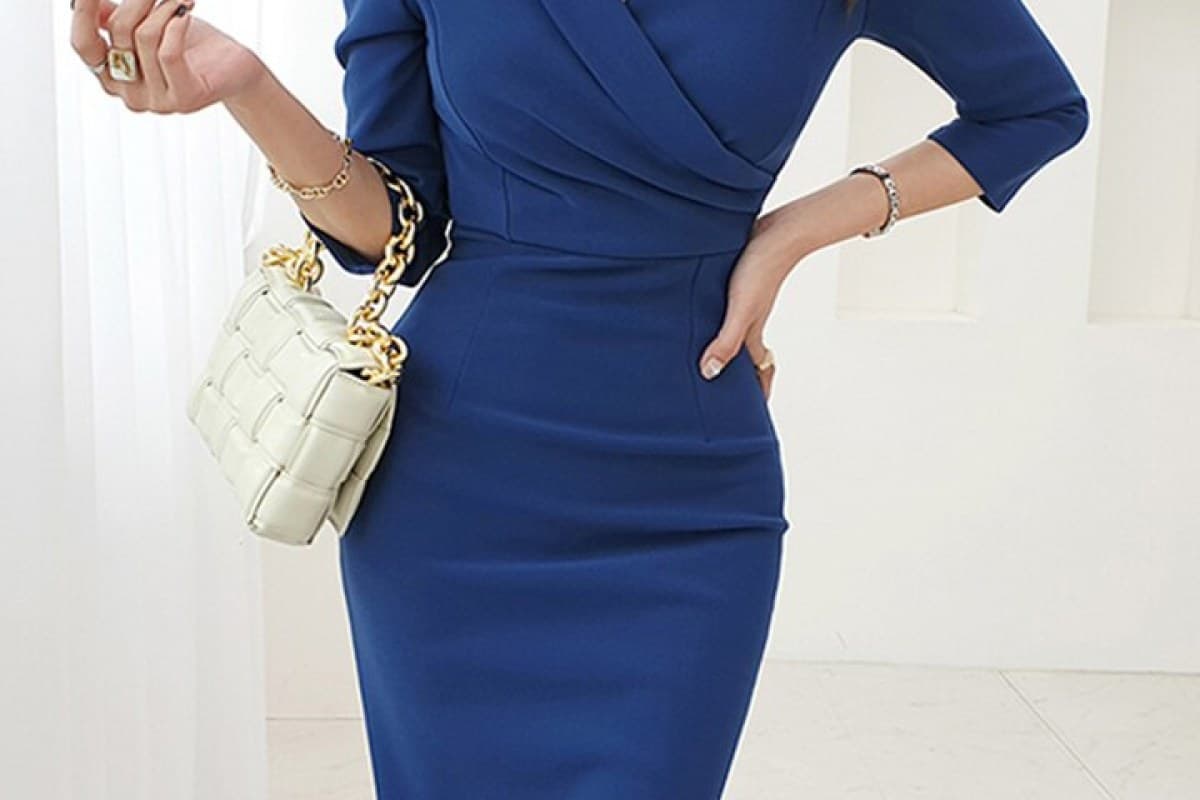
Find the midi hem, waistline and silhouette that suit your height and shape, with fabric, shoe and fit tips. ADDMPS helps you pick a midi dress that flatters.
The right midi dress for your body type comes down to three decisions: where the hem lands on your leg, where the waist is defined, and how the skirt moves. A midi hem that ends at the narrowest part of your lower leg, just below the knee or above the ankle bone, tends to look balanced on most people, while a hem that cuts across the widest part of the calf can visually shorten the leg. Below you will find how to check the hem on yourself, how to pick a waist line and silhouette for common builds, and which fabrics and shoes make a midi easier to wear.
What counts as a midi dress?
A midi dress ends somewhere between just below the knee and mid-calf, roughly the length of a lower leg. That range is wide, and a dress that is a “midi” on a 1.75 meter (5 ft 9) person can land at the ankle on someone shorter. The label tells you less than the position on your leg, so the hem is what to check.
Step 1: Find your hem position
Stand in front of a mirror with a tape measure or a piece of string, and check three points on your leg: the base of the kneecap, the widest part of the calf and the narrowest part just above the ankle.
Just below the knee: a hem that skims below the kneecap reads as tailored and is often the most flattering starting point for petite frames.
Mid-calf, at the widest point: this is the trickiest position for many people, because the horizontal line of the hem highlights the widest part of the leg. It can still work with the right shoes and a fluid fabric.
Lower calf, above the ankle: this suits taller frames and wide skirts. It shows the slender part of the leg and looks elegant with a heel or a pointed flat.
The rule of thumb: avoid stopping the hem exactly at the widest part of your calf, and shift it up or down by a few centimeters.
Step 2: Match the silhouette to your frame
The following are starting points, not rules, since a good fit matters more than any category. If you want to go deeper on a particular shape, our guides to the pear body shape, apple body shape and hourglass body shape go into more detail.
Petite (under about 1.60 m or 5 ft 3)
Choose a hem just below the knee, or a longer, flowing midi with a high waist and vertical detail.
Keep the skirt from being too voluminous. A wide, tiered skirt can overwhelm a small frame, so pick a slimmer A-line.
Nude or skin-tone shoes lengthen the line of the leg.
Tall (over about 1.75 m or 5 ft 9)
Longer midis, with a hem closer to the ankle, look proportionate.
You can carry tiers, ruffles and larger prints without being overpowered.
A low waistline or a belt at the natural waist both work well.
Short torso, long legs
Drop-waist or empire lines suit you. Avoid a high, defined waist that shortens the torso further.
A wrap or an A-line skirt with a slightly lower waist seam looks balanced.
Long torso, shorter legs
A high or empire waist gives visual leg length.
Pair with a shoe that matches your skin tone or the hem color to extend the line.
Rectangle or straight build
Create the impression of a waist with a belt, a wrap, a smocked waist or ruching.
A skirt with movement, such as pleats or tiers, adds volume at the hip.
Pear-shaped or fuller hips and thighs
A-line and wrap styles that fit at the waist and skim over the hip are comfortable and flattering.
Choose fabrics with fluid drape, not stiff or clingy weaves.
Details at the neckline or shoulders, such as a boat neck or puffed sleeve, balance the lower body.
Apple-shaped or fuller midsection
Empire lines, wrap tops and V-necks give definition without pulling at the waist.
Unstructured shirt-dress shapes with a soft belt, worn loose, are easy and comfortable.
A fabric with weight, such as crepe, hangs cleanly instead of clinging.
Hourglass or curvier bust and hip with a defined waist
Follow your natural waist with a wrap, a fit-and-flare or a belted style.
Avoid boxy shapes with no waist definition unless you style them with a belt.
Check the bust fit: gaping at the buttons is common, so choose a wrap or stretch fabric.
Necklines and sleeves: balance the top half
Because a midi covers much of the leg, the top half does a lot of the visual work. A few practical pairings:
Fuller bust: V-necks, wrap fronts and scoop necklines are usually more comfortable than high, flat necklines, which can pull across the chest. Look for a dress with some stretch or a wrap that adjusts.
Arms you prefer to cover: three-quarter sleeves and elbow-length sleeves work well and are practical in air-conditioned offices.
Step 3: Pick the right fabric
Fluid crepe, satin-finish or viscose-type fabrics: drape and swish, good for evening and office.
Cotton or poplin: more structure and shape, better for shirt-dress styles.
Knit and jersey: comfortable, but check that it is not too clingy. A mid-weight knit hides less than it reveals.
Lined versus unlined: a lining stops cling and see-through effects, particularly in light colors. Check the product page for fabric composition and lining details.
Prints work if the scale suits you: small prints on a small frame, larger prints on a taller frame. Vertical stripes and long lines lengthen, while horizontal stripes widen.
Step 4: Shoes and outerwear
Ankle boots: wear with a midi that hits mid-calf and leave a small gap of leg visible, or choose a hem that overlaps the boot top.
Knee-high boots: work with a hem that falls a few centimeters above the boot top, so you do not create a wide gap.
Heeled sandals or pointed flats: lengthen the leg line.
Sneakers: keep them low profile and clean. A denim or leather jacket makes the outfit feel casual.
Cropped jackets and blazers: shorten the body and show the waist. Try a structured piece from women’s blazers. Longer coats should end above the hem or well below it, not at the same point.
Fit checks before you buy
Sit down. The skirt should not pull tight or ride up.
Raise your arms. The waist seam should not lift and the sleeves should not restrict.
Walk. Slits and wraps should stay closed and stable.
Look from behind. Check that the zip lies flat and the fabric does not pull across the hips.
Check the hem. If the hem is off by a couple of centimeters, a tailor can shorten it, which is a low-cost alteration.
Mistakes to avoid with midi dresses
Buying by size label without checking the length. Length matters as much as fit.
Choosing a hem that ends exactly at the widest part of the calf.
Wearing a heavy, stiff fabric with a full skirt, which adds bulk.
Forgetting to check what you can wear underneath, such as a slip or seamless underwear, if the fabric is light.
Midi dress FAQ
Can petite women wear midi dresses?
Yes. Choose a hem that sits just below the knee, a higher waist and shoes that extend the leg line. If a dress is too long, a tailor can shorten it.
What shoes go with a midi dress?
Ankle boots, pointed flats, heeled sandals and clean sneakers all work. The best choice depends on the hem, the fabric and the occasion.
Is a midi dress suitable for work?
Generally yes, especially in a solid or subtle print with sleeves or a blazer over the top. Check your workplace dress code. For more on occasion dressing, see our women’s dress guide for every occasion.
How do I stop a midi dress from looking frumpy?
Define the waist, show a bit of leg or ankle, choose fabrics with movement and keep accessories neat.
Ready to try it? Explore women’s dresses at ADDMPS and use the hem check above to shortlist the lengths that suit you.
Shop an outfit around one piece with ADDMPS: choose star or backdrop, set your colours, match formality, then finish with shoes and one smart accessory.
Steam or dry clean your blazer? ADDMPS explains when each is right, how to steam at home step by step, and which fabrics need extra caution before you start.
Cookies on ADDMPS
We use necessary cookies for cart, checkout, and security. With your OK, we also use analytics cookies (Google Analytics) to understand traffic and improve the store. See our Privacy Policy.