
Build an Outfit Around One Piece: 5 Simple Steps
Shop an outfit around one piece with ADDMPS: choose star or backdrop, set your colours, match formality, then finish with shoes and one smart accessory.
Hourglass dressing starts at the waist. See which dresses and blazers follow your curves, how to fix gaping shirts and trousers, and shop shapes at ADDMPS.
Hourglass body dressing comes down to one principle: honour the waist. If your bust and hips are close in measurement and your waist is clearly narrower, clothes that follow that curve look tailored, while clothes that hang straight from the bust hide it and make you look wider than you are. That is why the best dresses and blazers for an hourglass are the ones that are shaped, darted or belted, and why so many off-the-rack pieces need a small alteration to look right. This guide covers the dress cuts, blazer details and fit problems specific to the shape.
An hourglass has a bust and hip measurement that are roughly balanced, usually within a couple of inches of each other, and a waist that is noticeably smaller, often by around eight to ten inches or more. Shoulders tend to line up with the hips. To check, measure the fullest part of your bust, the narrowest part of your waist and the fullest part of your hips, and compare. If the waist is far smaller than both, you are in hourglass territory.
The challenge is that standard sizing works from a straight-ish block. A size that fits your bust and hips usually gapes at the waist, and a size that fits the waist will not close over the bust or hips. That mismatch explains most hourglass frustration, not your body.
Look for waist definition built into the pattern: a wrap dress, a fit-and-flare, a sheath with a waist seam, or a belted shirt dress. The dresses collection is a good place to compare cuts, and each product page lists fabric composition.
The wrap is the shape-maker’s cheat: it ties exactly where you need it and the crossover follows the bust. Fit-and-flare gives a fitted bodice to the waist seam and a skirt that clears the hips, so nothing pulls across the seat. Check that the waist seam lands on your natural waist. If it sits an inch too low, the dress shortens your legs.
A structured sheath works beautifully in a fabric with body and a little stretch, such as ponte or a heavy crepe. Thin, clingy jersey shows every contour and every seam of undergarments. Darts at the bust and waist do the shaping, so a sheath with no darts will drape from the widest point and hide the waist.
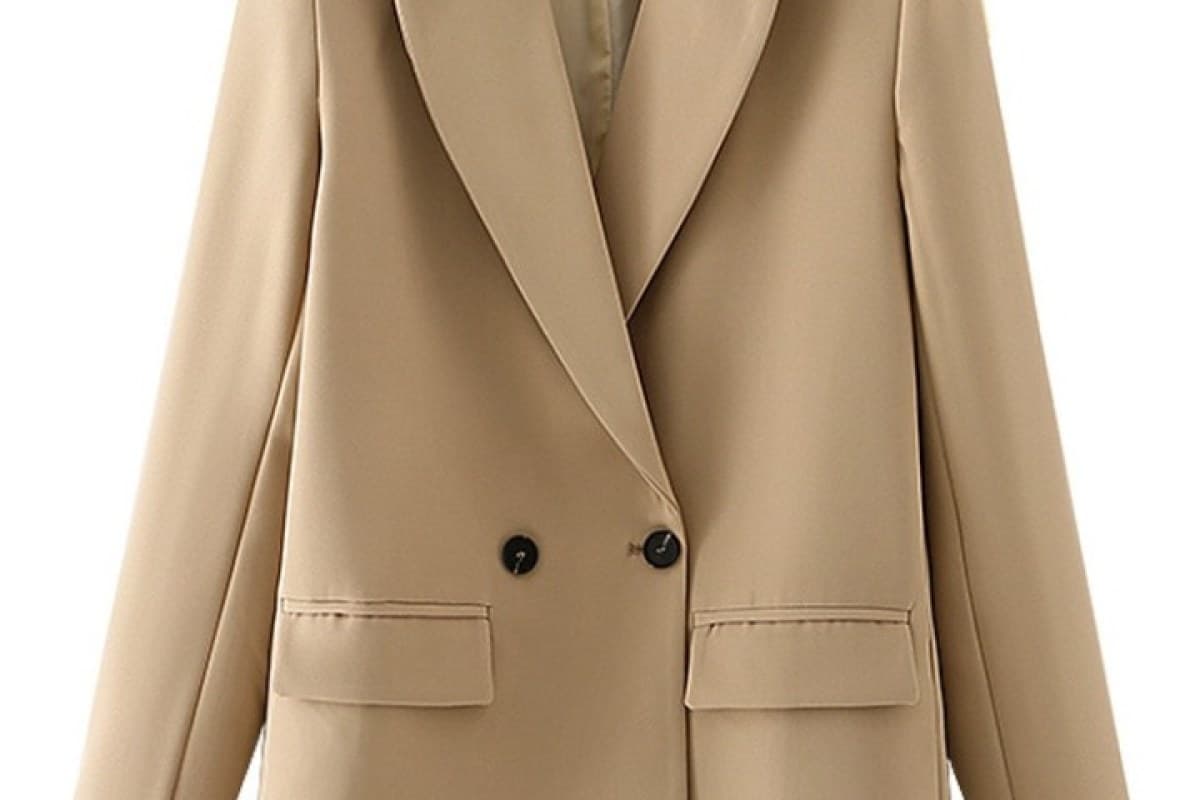
A blazer is where the shape most often fails, because a jacket sized for the bust is often too wide in the shoulder and too loose at the waist. Use this order of priority when trying one on:
The women’s blazer collection has cuts from tailored to relaxed, and the blazer fit guide by body type covers the general rules. For work outfits, the office blazer outfit ideas show how to build them out.
The most common alteration is taking in the waist and back seams of a jacket that fits the shoulders and bust. It is a routine job and much easier than trying to alter shoulders, which is rarely worth it. Shortening sleeves is also simple. If the blazer gapes at the bust when buttoned, wear it open, or add a discreet snap or a stitch between the buttons.
Button-front shirts are the notorious problem. If the buttons gape at the bust, the shirt is too small across the chest, and going a size up creates too much fabric at the waist. Look for shirts with stretch, or with darts, or plan to have the sides taken in. Alternatively, wrap tops, knit tops and bodysuits solve the issue without alterations. Tucking is your friend. Tuck fitted knits into a high-waisted trouser or skirt and add a slim belt to show the waist.
Trousers with a high or mid rise and a slightly curved waistband follow the shape better than a straight one. If trousers fit the hips but gap at the back of the waist, that is the classic hourglass problem; an alteration at the centre back seam usually solves it. Pencil skirts and A-line skirts that sit at the natural waist show off the waist-to-hip ratio. Our guide to how to style high-waist pants explains how rise affects proportion.
If you carry more of your weight in your hips than in your bust, see the pear body shape clothing guide.
Look for fabrics with weight and a little stretch, such as ponte, crepe and double-knit jersey. They follow curves and hold a clean line. Very thin jersey clings to every contour, and very stiff fabrics stand away from the waist and hide it. If you like satin, choose a heavier weight that is lined. When two sizes both seem to work, choose the fabric with more give and take in the waist rather than sizing up and losing your shape.
Most off-the-rack patterns assume a smaller bust-to-waist difference. You buy for the bust or hips, and the waist ends up loose. A tailor can fix it in a few minutes for most tops, jackets and trousers.
Not at all. If you like the look, pair it with slim, defined pieces underneath, or add a belt over the top. The key is to have one clearly shaped element in the outfit.
They are the most forgiving, but the neckline needs care. If the wrap opens too low when you move, add a camisole or use a small hidden snap.
If the blazer fits at the shoulders but is tight at the bust, look for a cut with a fuller chest or shape rather than a larger size that will be too wide in the shoulders.
Browse ADDMPS women’s collections and look for darts, wrap closures and waist seams to find shapes that follow your curves.
Edited by the ADDMPS Style Team.
Shop an outfit around one piece with ADDMPS: choose star or backdrop, set your colours, match formality, then finish with shoes and one smart accessory.

Steam or dry clean your blazer? ADDMPS explains when each is right, how to steam at home step by step, and which fabrics need extra caution before you start.