
Build an Outfit Around One Piece: 5 Simple Steps
Shop an outfit around one piece with ADDMPS: choose star or backdrop, set your colours, match formality, then finish with shoes and one smart accessory.
Chinos and dress pants differ in fabric, finish and formality. Find out which suits your dress code, plus fit and care tips, then shop dress pants at ADDMPS.
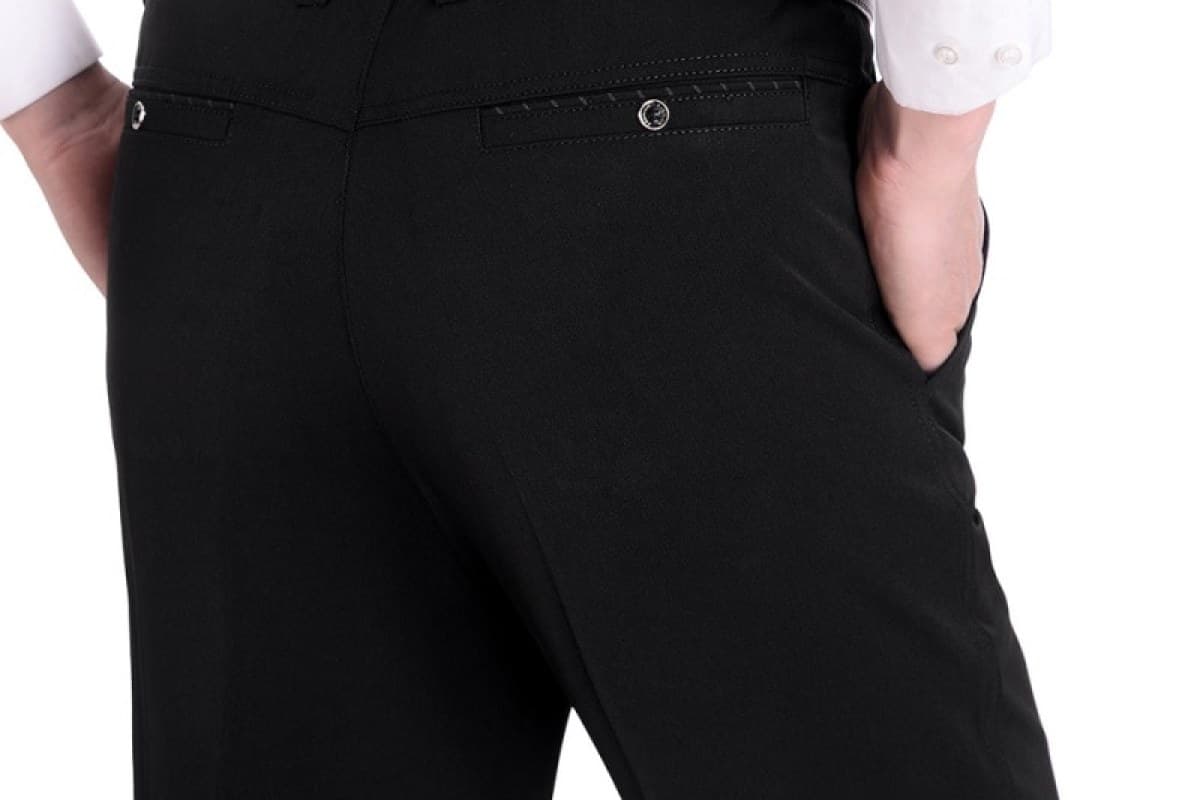
The difference between chinos and dress pants is fabric, finish and formality. Chinos are made from cotton twill, have a soft, matte surface and are casual to smart casual. Dress pants (dress trousers) are usually cut from wool or a wool blend, have a sharper drape and a pressed crease, and are meant to be worn with a jacket, shirt and tie or a suit-adjacent outfit. Both are useful, and which you reach for depends on your dress code, the shoes you own and how much upkeep you want. Here is how to tell them apart, when to wear each and how to buy well.
Chinos are trousers made from a tightly woven cotton twill, originally associated with military uniforms. They come in stone, khaki, olive, navy and grey as core colours, and they are the standard casual-to-smart trouser for offices that allow business casual. Because they are cotton, they crease when you sit, and they soften and fade with washing, which many men like.
Look at the fabric weight: a heavier twill hangs well in autumn, while a lighter cotton or cotton-linen blend feels better in summer. Check the fabric composition on the product page, because a little elastane can improve comfort but changes how the cloth drapes.
Dress pants, also called dress trousers or slacks, are the trousers that belong to tailoring. They are made from wool or wool blends in a fine weave and they hold a pressed crease down the front of each leg. Some come as the second half of a suit, while others are sold separately in solid greys, navies and blacks, with a wide range of cuts. The finer cloth drapes cleanly from the hip to the hem, and the waist is more structured, often with an extended tab closure.
Our guide to business casual for men shows how to build a full week from them.
Use the dress code as your first filter:
The trouser should sit comfortably at your waist, not dig into it, and the seat should lie smoothly without pulling. The leg should taper cleanly toward the ankle, with a shape that matches your build, and should not balloon or cling.
Rise is the distance from the crotch seam to the waistband. Dress pants often have a mid or high rise that sits at or just above the hip bones and keeps the shirt tucked and the line smooth; modern chinos more often have a mid or low-mid rise. Choose whichever sits comfortably at your natural waist and does not require a belt to hold the seat in place.
A slight break or no break suits both, with a cleaner look on dress trousers. With loafers or sneakers, a hem that ends at or just above the ankle bone looks modern and lets the shoe show. A full break, where the hem bunches at the shoe, suits traditional and taller silhouettes but tends to look heavier. Cuffed (turn-up) hems suit both and add weight to the hem, which suits wider or straighter legs. Ask a tailor to check your hem with the shoes you plan to wear.
If you are building around a navy blazer, see our navy blazer outfit ideas for which trouser to pick.
Chinos are the low-maintenance option. Wash them in cool or warm water according to the label, hang them to dry, and steam or press them while slightly damp for the best result. Cotton twill can fade at the knees and seat over time, and that patina is part of the look. Wool dress pants wear more slowly if you look after them: brush after wearing, hang them on a trouser hanger by the hems or waist clip, rest them for a day between wears, and press with a damp cloth. Dry clean only when they are actually dirty, not by default, since frequent cleaning wears the cloth. To understand how each cloth behaves, see our men’s fabric guide to worsted, cotton and linen.
A practical way to decide is cost per wear. If you sit at a desk and wear trousers four days a week, two pairs of dress pants and two pairs of chinos, rotated, will outlast a pile of cheaper pairs worn to death.
Yes. In most business casual workplaces, chinos in navy, khaki, olive or grey with a shirt or knit and leather shoes are appropriate. For a more formal room, choose the smoother, wool dress trousers.
You can, with a fine-gauge knit, a plain shirt and loafers or clean minimalist shoes. A wool trouser in flannel is easier to dress down than a shiny worsted one.
A light press or a steam removes creases and makes them look sharp. Many chinos are treated to reduce wrinkles; check the care label.
Suit pants are made from the same cloth as a specific jacket. Dress pants are sold separately and can be paired with different jackets, so the cloth is chosen to be versatile.
Ready to compare cuts? Browse the men’s dress pants at ADDMPS and read the fabric details on each product page.
Edited by the ADDMPS Style Team.
Shop an outfit around one piece with ADDMPS: choose star or backdrop, set your colours, match formality, then finish with shoes and one smart accessory.

Steam or dry clean your blazer? ADDMPS explains when each is right, how to steam at home step by step, and which fabrics need extra caution before you start.