
Build an Outfit Around One Piece: 5 Simple Steps
Shop an outfit around one piece with ADDMPS: choose star or backdrop, set your colours, match formality, then finish with shoes and one smart accessory.
Measure your wrist and match case diameter, lug-to-lug and thickness so a watch fits properly. ADDMPS explains the numbers that matter with clear size ranges.
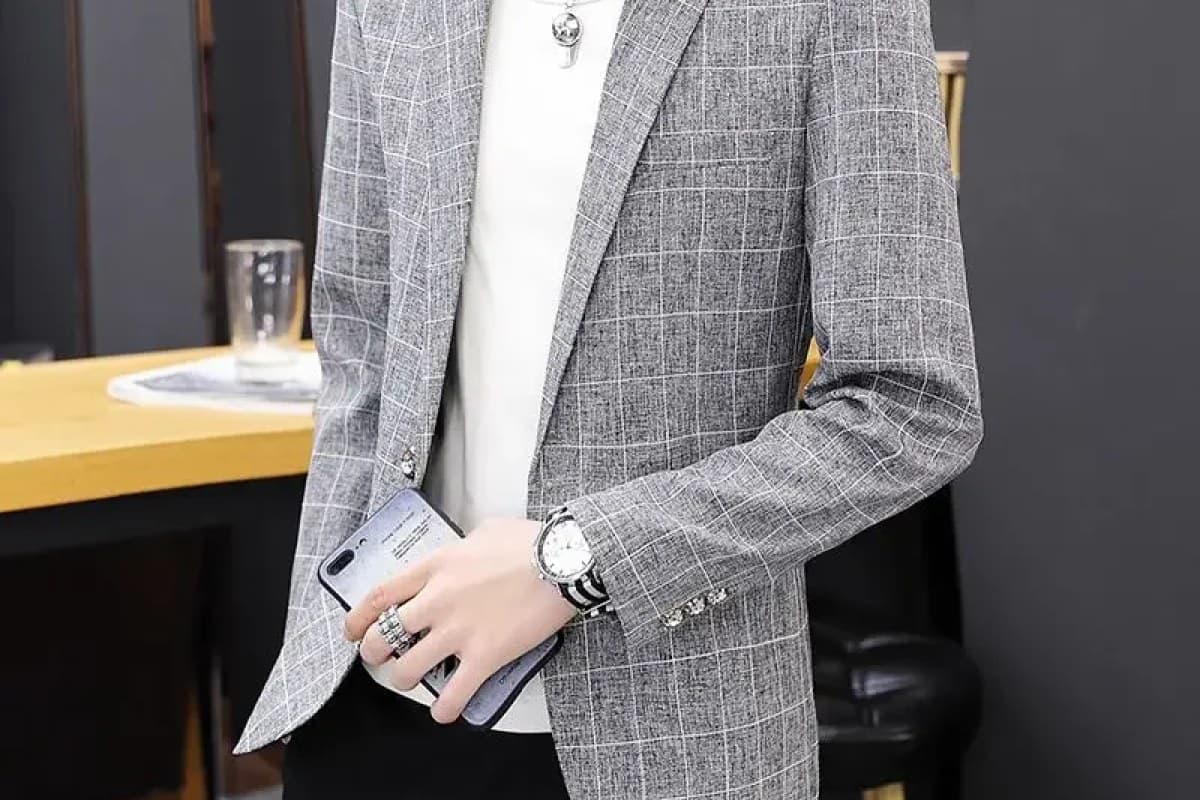
The right watch size for your wrist comes down to three numbers, not one: case diameter, lug-to-lug length and case thickness. Most people only check diameter, which is why a watch listed as 40mm can look perfectly proportioned on one wrist and oversized on another. As a starting point, wrists of roughly 6 to 6.75 inches (15 to 17 cm) tend to suit cases around 34 to 38mm, wrists of roughly 6.75 to 7.5 inches (17 to 19 cm) suit about 38 to 42mm, and larger wrists can carry 41mm and up. The rest of this guide shows you how to measure properly and where to bend those rules.
You need a soft tape measure. If you do not have one, wrap a strip of paper or a phone charging cable around your wrist, mark the overlap with a pen, then lay it flat against a ruler. Measure just above the wrist bone, at the spot where a watch case would actually sit, not at the narrowest point of your forearm.
Then take a second measurement that most guides skip: the flat top width of your wrist. Hold a ruler across the top of the wrist, from one side edge where the flat surface starts to curve down to the other edge. On many adult wrists this lands somewhere between 45 and 60mm. This is the number that matters for lug-to-lug fit, and it explains why two people with identical wrist circumference can need different watches.
Case diameter is the width of the case body across the dial, measured without the crown. It is the headline figure in every product listing, and it sets how much of your wrist the watch appears to cover from above. Use these ranges as a rough map rather than a rulebook:
Dial colour and bezel design shift these numbers. A watch with a thin bezel and a large dial opening looks bigger than its spec, while a thick bezel around a small dial looks smaller. A black dial with a dark case tends to read smaller than a white or silver dial of the same diameter, because the pale face catches the eye and expands the visual footprint.
Lug-to-lug is the distance from the tip of the upper lugs to the tip of the lower lugs, measured along the length of your arm. It is the number that tells you whether the watch will hang off the edges of your wrist. If the lugs extend past the flat top of your wrist, the strap has to bend sharply downward, the case rocks, and the watch feels unstable even when the strap is snug.
A workable rule: the lug-to-lug should be no longer than your flat top wrist width, and slightly shorter is better. If your flat top measures 50mm, a watch with a lug-to-lug of 46 to 49mm will sit cleanly. A watch with a 52mm lug-to-lug will overhang.
This is also why a 40mm watch with short, downward-curving lugs can wear more smoothly than a 38mm watch with long, straight lugs. When a listing does not include lug-to-lug, it is worth asking or looking for it on the product page before you buy. If it is not listed, diameter and thickness alone give an incomplete picture.
Case thickness runs from about 6mm on the slimmest dress watches to 14mm or more on rugged sport and multi-function watches. Thickness matters in three ways:
Digital and multi-function models are often thicker because of the module inside. If you wear tailored shirts regularly, thickness deserves as much attention as diameter. Our piece on wearing a watch with a suit goes into cuff clearance in more detail.
The gap between the lugs, known as lug width, determines which straps fit and how the watch balances on your wrist. Common sizes run from 12mm on small ladies’ watches up to 22 or 24mm on larger sport watches. A rough rule: strap width is about half of the case diameter, give or take. A 20mm strap on a 40mm case is a typical, balanced proportion. If you plan to swap straps later, note the lug width now, since straps are sold by that figure.
Strap width also affects perceived size. A wide strap makes a watch look sturdier and larger; a narrow strap makes it look refined. On a smaller wrist, a slightly narrower strap can help a larger case look more balanced.
Prioritize a short lug-to-lug and a modest thickness. Watches under about 36mm with a thin profile are usually the most forgiving. Rectangular cases can wear larger than their diameter suggests, so check the length figure as well.
You have the widest choice. The sensible move is to decide by style: thinner and closer to 36 to 39mm for dressier wear, and 40 to 42mm for casual and sport. Watch the lug-to-lug rather than assuming any 40mm will work.
A watch under 38mm can look like a bracelet charm. Go for 41mm and above, and consider bracelets or wide straps that visually anchor the case. Check that the strap or bracelet is long enough, since some listings cap out at a length that does not close on a larger wrist.
A flat, wide wrist can carry longer lugs comfortably. A narrow, rounded wrist needs shorter lugs, ideally curved down, because a flat lug bottom will lift off the skin at both ends.
If you want to preview a watch before ordering, cut a circle of card to the case diameter and a rectangle to the lug-to-lug length. Place the circle on your wrist and see how much of the flat top it covers. Then lay the rectangle lengthwise and check whether the ends remain on the flat surface. It takes two minutes and prevents most sizing regrets. For fit at the strap end, aim for a snug feel where you can slide a fingertip under the strap without it sliding around.
Not necessarily. Diameter is only part of it. On a wrist under 6.5 inches a 40mm watch with a long lug-to-lug will overhang, but a 40mm watch with a compact lug-to-lug and thin bezel can sit fine. Check lug-to-lug against your flat top wrist width.
Traditionally, women’s watches run smaller, but wrist size matters more than the label. Plenty of women prefer 36 to 40mm cases, and plenty of men with slim wrists do better at 36 to 38mm. Choose by your measurements.
Go with the smaller case if you wear fitted sleeves or mostly dressier outfits, and the larger one if you wear watches primarily with casual clothes and want presence. If the lug-to-lug is the same, thickness is often the tiebreaker.
A lot. A slimmer, tapered strap makes the same case look smaller, and a wide one makes it look larger. Strap length and hole spacing also determine whether the watch closes comfortably on your wrist.
When you are ready to compare, browse the men’s watches and women’s watches and check each product page for size details. Our range is compact, so use the measurements in this guide to shortlist quickly, and see the shipping and returns page for delivery and return details. If you are still deciding on style, read our breakdown of dress watches versus sport watches or the wider guide to pairing watches with formal and casual outfits.
Edited by the ADDMPS Style Team.
Shop an outfit around one piece with ADDMPS: choose star or backdrop, set your colours, match formality, then finish with shoes and one smart accessory.

Steam or dry clean your blazer? ADDMPS explains when each is right, how to steam at home step by step, and which fabrics need extra caution before you start.