
Build an Outfit Around One Piece: 5 Simple Steps
Shop an outfit around one piece with ADDMPS: choose star or backdrop, set your colours, match formality, then finish with shoes and one smart accessory.
Match your watch, tie bar, cufflinks and belt buckle without looking stiff. ADDMPS explains metal families, tie bar placement and how tie colour meets dial.
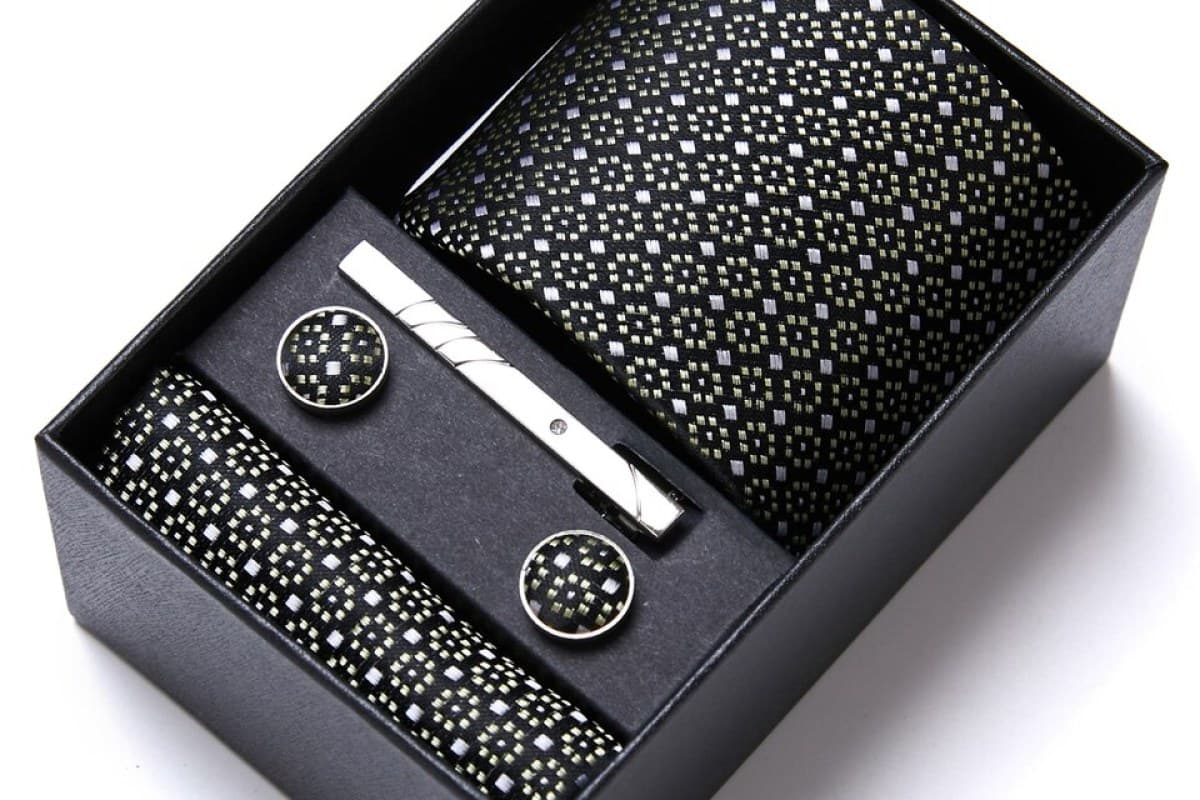
The simple rule for tie and watch matching is that the watch case, tie bar, cufflinks and belt buckle should belong to the same metal family, or, if you mix, each metal should show up at least twice so it looks planned. Silver-toned steel with silver-toned accessories, or gold-toned with gold-toned, is the safe route. Mixing works when you repeat things: silver watch and buckle, gold ring and tie bar. The tie itself does not need to match the watch at all, but its colour and pattern should give the dial room to breathe. Here is how to apply that in practice, with details on tie bars, dial colours, strap colours and the mistakes that make accessories look accidental.
Before you can match, you need to know what is on show. In a shirt-and-tie outfit the visible metal is usually a short list:
Not all of these need to match. Wedding bands and glasses frames are personal and are rarely judged. The items people notice are the ones near the tie and on the wrist, so concentrate on watch, tie bar, cufflinks and buckle.
The most common family for watches and the easiest to match. It suits navy, grey and charcoal suits, white and pale blue shirts and cool-toned ties. Steel is neutral enough to sit comfortably with nearly every outfit.
Warmer and more traditional. Yellow gold suits navy, brown and burgundy palettes, cream shirts and warm-toned ties. Rose gold is subtler and works with brown leather and softer colour palettes. Treat rose gold as a gold-family metal when you match.
Modern and understated. Dark metal blends into charcoal and black outfits, and can be matched with either silver or gold accessories in small doses because it reads as almost neutral. It does look more casual on a chunky sport watch than on a slim dress model.
Steel watch, steel tie bar, steel cufflinks, silver buckle. It looks tidy and never fails. If you work in a conservative setting or you are unsure, this is the route to take.
Choose one main metal and one accent, and repeat each of them. For example: a two-tone watch that contains both, a silver buckle and silver cufflinks, and a gold tie bar echoing the gold on the watch. The two-tone watch acts as a bridge, which is why it is such a handy piece; our article on styling two-tone watches goes into it. Whatever you choose, avoid a single stray metal item, such as one gold bar with everything else silver, unless the watch links them.
A tie bar is functional as well as decorative: it holds the tie against the shirt. Poor placement is one of the most common problems.
Tie width and knot size affect where the bar looks best; see our guide on tie width, knots and formality for how to balance them.
No, but they should not fight. Three simple relationships work well:
Avoid the opposite: a bold-coloured dial with a bold tie pattern makes the outfit noisy. The watch strap should match your shoes and belt, not the tie, as our guide on wearing a watch with a suit explains.
A knitted tie, a wool tie or a textured silk tie has a casual feeling, and looks best with a casual-leaning watch such as a field style on a leather strap. A smooth, shiny silk tie calls for a smoother, dressier watch. If the tie has a pattern with fine lines, choose a watch with a simple dial; a busy dial with a busy tie makes it hard to see either. Matching the “temperature” of the fabric to the watch is a subtle way to keep things coherent.
Cufflinks are the second most visible metal after the watch. They sit near it, so the two are almost always seen together when you reach or shake hands. Keep cufflinks in the same metal as the watch case unless they are clearly a different, deliberate accent. Lapel pins and collar bars are additional items, so avoid wearing all of them at once. Our article on when and how to wear cufflinks covers the choices.
No. It is optional. A well-knotted tie with a slim knot and a properly tucked back stays in place on its own, especially when you wear a jacket.
You can, but repeat each metal at least twice. If you have silver cufflinks or a silver buckle plus the bar, the gold watch is a single accent and works. A two-tone watch makes it easier.
It helps but is not required, since it is often hidden beneath a jacket. The leather colour should match the shoes; the buckle metal should belong to the same family as the watch if you can manage it.
A black or dark-coated case reads as neutral. Wear it with silver or gold accessories in small doses, or with matching dark hardware for a modern look.
To complete the outfit, browse men’s ties and men’s watches in the shop, and check each product page for colour and finish details.
Edited by the ADDMPS Style Team.
Shop an outfit around one piece with ADDMPS: choose star or backdrop, set your colours, match formality, then finish with shoes and one smart accessory.

Steam or dry clean your blazer? ADDMPS explains when each is right, how to steam at home step by step, and which fabrics need extra caution before you start.